
As the saying goes, even the cleverest housewife cannot cook without rice. In the biopharmaceutical field, difficult‑to‑express proteins are exactly such “rebellious” entities. Because of their low yield, many promising molecules stall at the early research stage. Canton Biologics has developed the DTEasy toolbox specifically for difficult‑to‑express proteins, comprehensively addressing these challenges to help the biopharmaceutical industry break through bottlenecks and achieve smooth progress.
In the biopharmaceutical field, expressing and producing certain difficult‑to‑express proteins – such as some monoclonal antibodies, cytokines, blood factors, enzymes, membrane proteins, and antibodies with complex engineered structures – has always been a major challenge.
Reasons for Low Yield of Difficult‑to‑Express Proteins
1. Difficult folding, unstable structure, or high hydrophobicity
For the following types of proteins:
-
Large molecular weight, disulfide‑rich protein complexes
-
Proteins requiring complex glycosylation modifications
-
Highly hydrophobic proteins such as membrane proteins, metalloproteins, and some cytokines, or proteins that require specific ligands to stabilize their structure
These proteins often struggle to fold correctly or maintain a stable structure, readily forming aggregates within cells, leading to protein degradation and cell apoptosis.
Among monoclonal antibodies, some subclasses also show low yields (below 1 g/L), mainly due to sequence issues in the germline or complementarity‑determining regions of the antibody heavy and light chains, which prevent efficient assembly of the complex and lead to misfolding or aggregation.
2. Cytotoxicity
The toxic functions of proteases and thrombin can induce apoptosis when overexpressed, making recombinant expression difficult.
Because the yield of difficult‑to‑express proteins is limited, many promising molecules stop at the early research stage due to developability constraints – a great pity!
To solve this long‑standing problem in the biopharmaceutical industry, Canton Biologics has developed the DTEasy platform for difficult‑to‑express proteins. By integrating and optimizing each key stage of the expression process, it successfully increases the yield of these challenging proteins.
Canton Biologics’ DTEasy Toolbox – A Systematic Strategy to Solve DTE Pain Points
Canton Biologics has developed the DTEasy toolbox for difficult‑to‑express proteins, utilizing molecular engineering, proprietary vectors, optimal host cell line selection, and customized processes to comprehensively improve DTE yield.
1. Molecular Engineering – Sequence Modification to Enhance Protein Stability
Based on sequence analysis and protein structure prediction, we improve the three‑dimensional structure of the protein and increase its thermal stability by introducing mutations or optimizing the amino acid sequence.
In one project, through sequence risk analysis and point mutations, we successfully increased the cell pool yield by 7.6 times without altering activity.
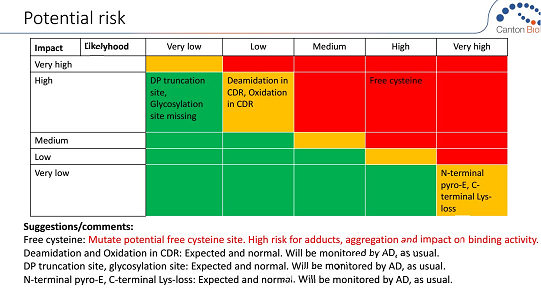
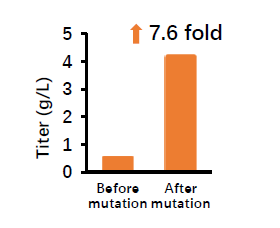
(Image placeholder – Source: Canton Biologics internal research data)
2. Proprietary Vectors – Vector Optimization to Improve Protein Synthesis Efficiency
Using transcriptomic differential expression analysis, we insert cis‑acting elements positively correlated with DTE yield into vectors, achieving a 100%–400% increase in yield for different types of recombinant proteins.
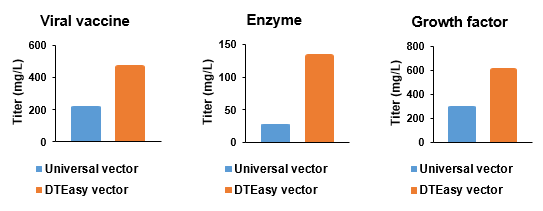
(Image placeholder – Source: Canton Biologics internal research data)
3. Optimal Host Cell Line Selection – Selecting the Right Host for High‑Level Expression
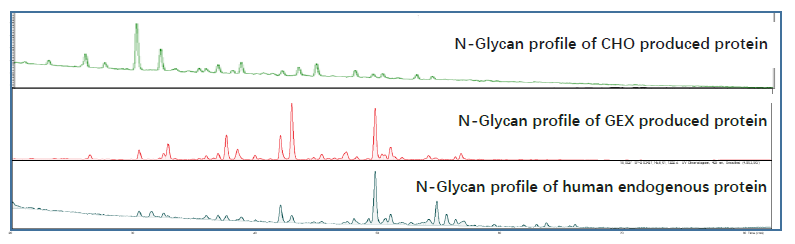
Canton Biologics’ proprietary GlycoExpress® human myeloid‑derived cell line is specifically designed for expressing difficult glycoproteins. It provides higher yield and glycan profiles closer to natural human proteins for recombinant proteins such as GPCRs, blood factors, and complex multimers.
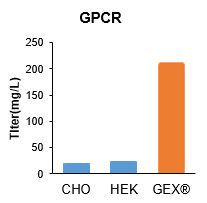
(Image placeholder – Source: Canton Biologics internal research data)
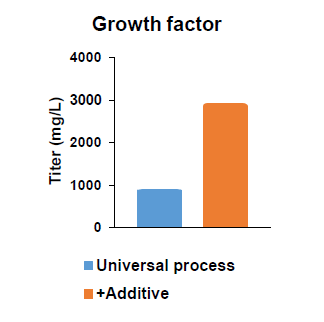
4. Customized Processes – Proprietary Additives to Increase Yield Up to 3‑Fold
For proteins that exert stress on cells during culture, adding additives to increase cell tolerance can also enhance expression. The proprietary DTEasy additives require only a single simple addition during the culture process and can increase yield by up to 3‑fold.
(Image placeholder – Source: Canton Biologics internal research data)
In summary, Canton Biologics’ DTEasy platform employs a multi‑pronged approach – molecular design, vector optimization, optimal host cell line selection, and customized processes – to solve the expression difficulties of various protein types. It helps clients unlock the production potential of high‑value but traditionally difficult‑to‑express proteins, accelerate development timelines, provide flexibility in design choices, and ultimately expand patient access to innovative biologic products.